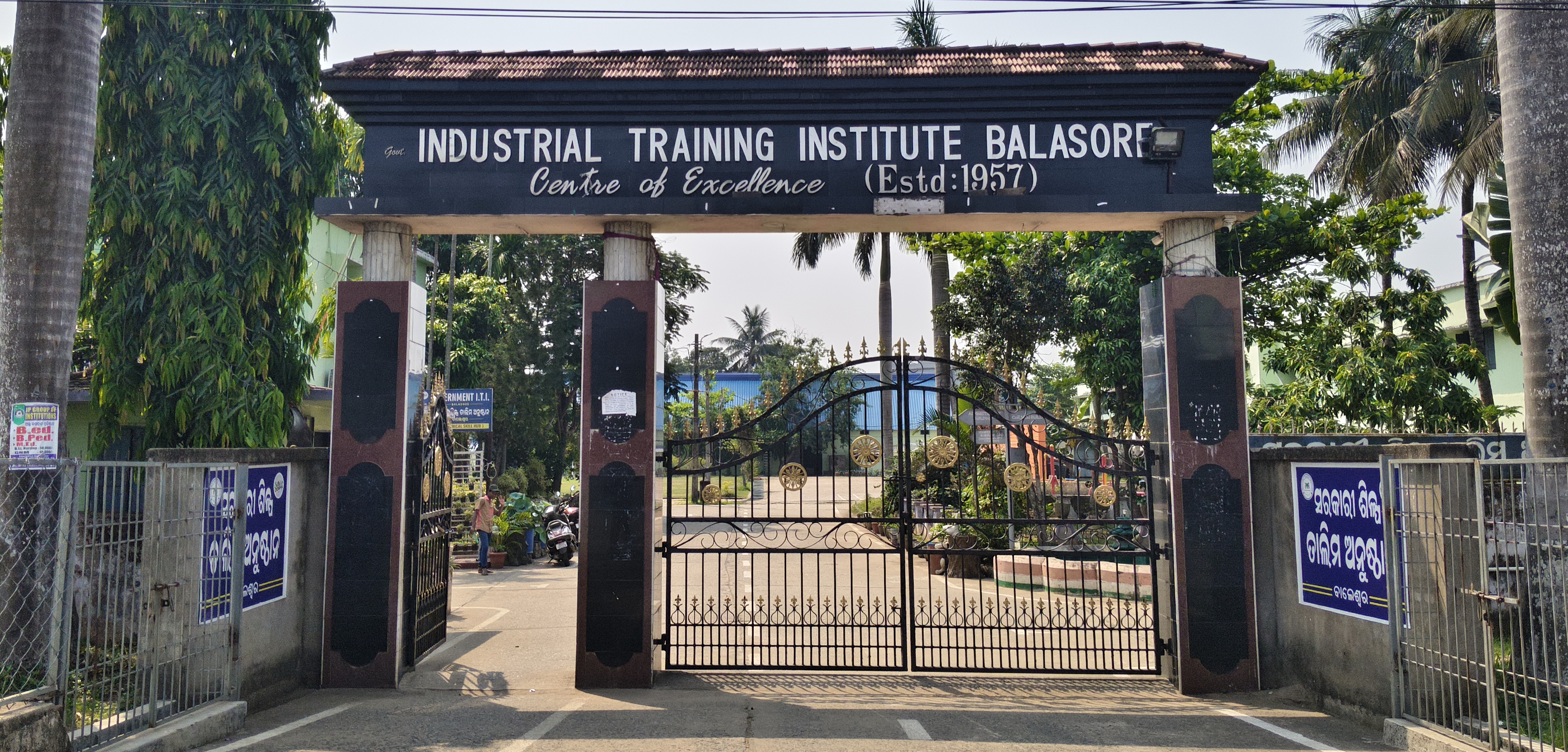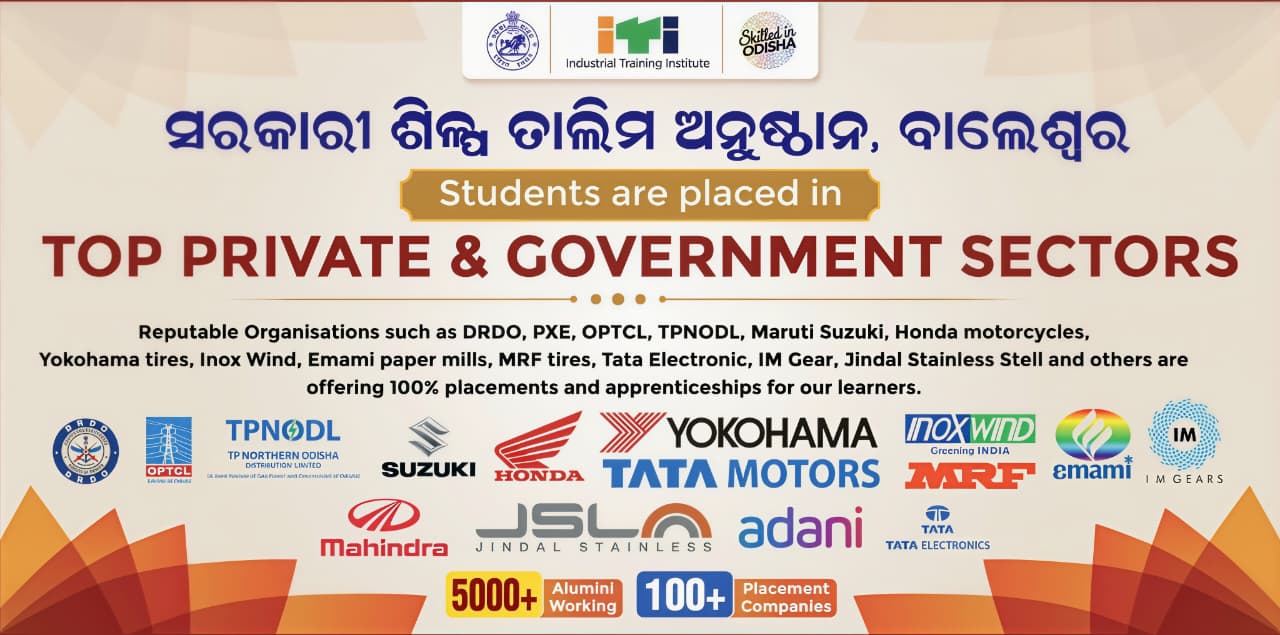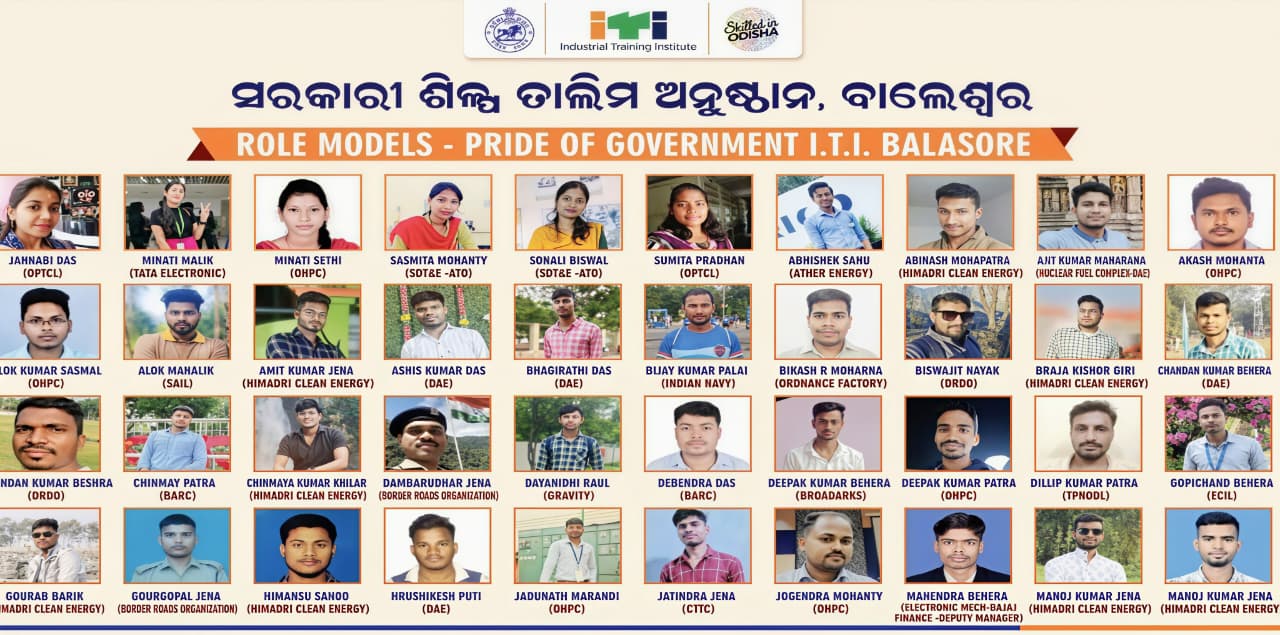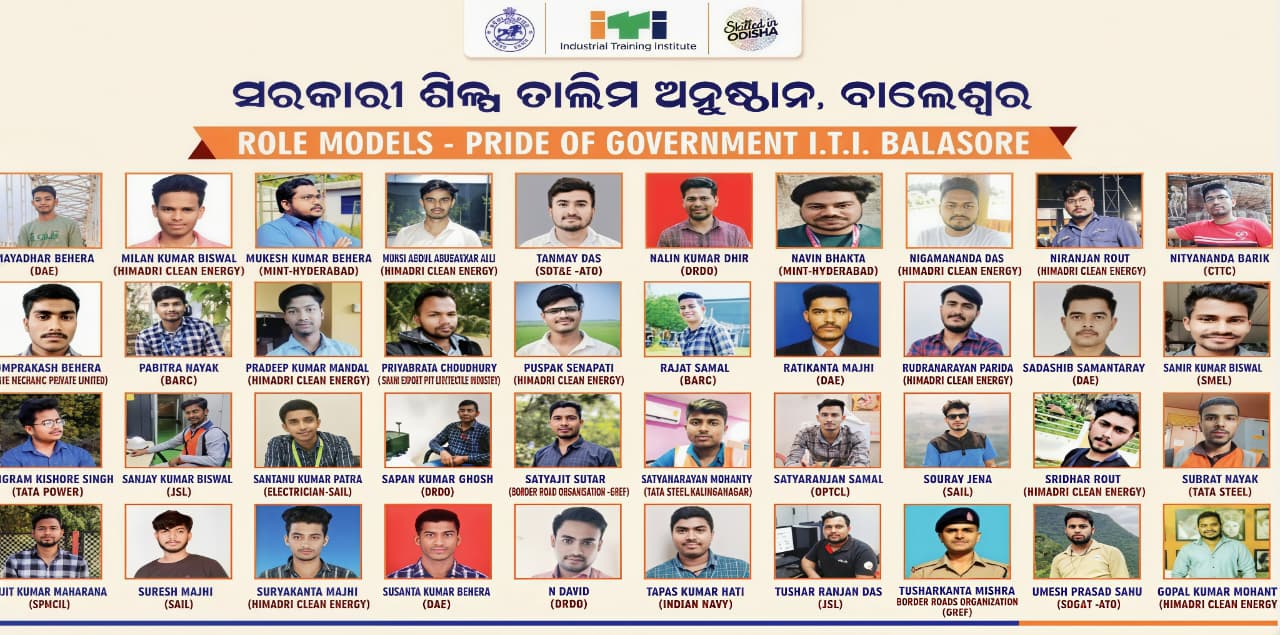
Industrial Training Institute, Balasore

Government of Odisha

ଶିଳ୍ପ ତାଲିମ ଅନୁଷ୍ଠାନ, ବାଲେଶ୍ଵର, ଓଡ଼ିଶା ସରକାର
Complete Digital Resource Center for ITI Trainees

📢 College Notices & Updates

Welcome to GOVT ITI Balasore Digital Hub! | Read Daily Top India News Here. | NCVT MIS results portal updated. | Local Job Links Fixed.

Our Respected Leaders

Principal

Er.Mahendra Kumar Behera

Principal (Sir)

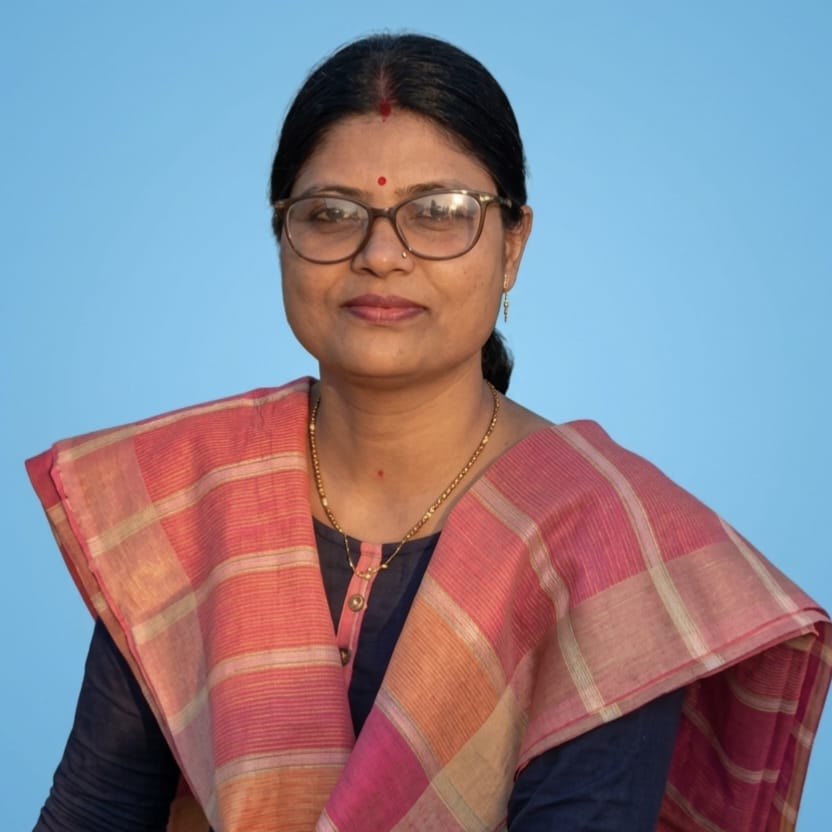
T.O Ma'am

Mrs.Prativa Diwedi

Training Officer (Ma'am)

T.O Sir

Mr.Rajat Mishra

Training Officer (Sir)

Click hear to Read ITI Articles & Exam Tips

📰 Top India News (Live Updates)

Loading latest India news...

🌐 Bharat Skills

One-click access for syllabus.

NCVT MIS PORTAL

Access the official National Council for Vocational Training (NCVT) MIS portal. Log in to your trainee profile to download your semester marksheets, National Trade Certificate (NTC), and check your CBT exam results.

🏫 ITI Admissions (SAMS)

Apply online for new ITI admissions across Odisha directly through the SAMS portal.

🧰 Apprenticeship

Apply for apprenticeship training across India via NAPS

🧰 PM Internship Portal

Prime Minister's Internship Scheme ke tahat India ki top MNCs mein 1 saal ka corporate experience lein. ITI pass-outs is sunehre mauke ke liye direct apply kar sakte hain.

📝 CBT Exam & NIMI Mock

Online mock tests (NIMI) for all ITI trades and Employability Skills preparation.

🎓 Odisha Scholarships & National Scholarship

Apply for the Odisha State Scholarship scheme for ITI students. & Apply for National Scholarship Portal (NSP) and complete your OTR registration.

🏢 India Jobs & Local Odisha

Official portals for Employment Exchange and National Career Service.

📏 BMI Calculator

Calculate your BMI (Body Mass Index) easily.

Our Specialized ITI Trades

Govt. ITI Balasore offers diverse technical programs designed to provide hands-on practical experience, state-of-the-art training, and direct industry placement. Explore our range of Engineering and Non-Engineering trades that empower students for a successful career.
COPA

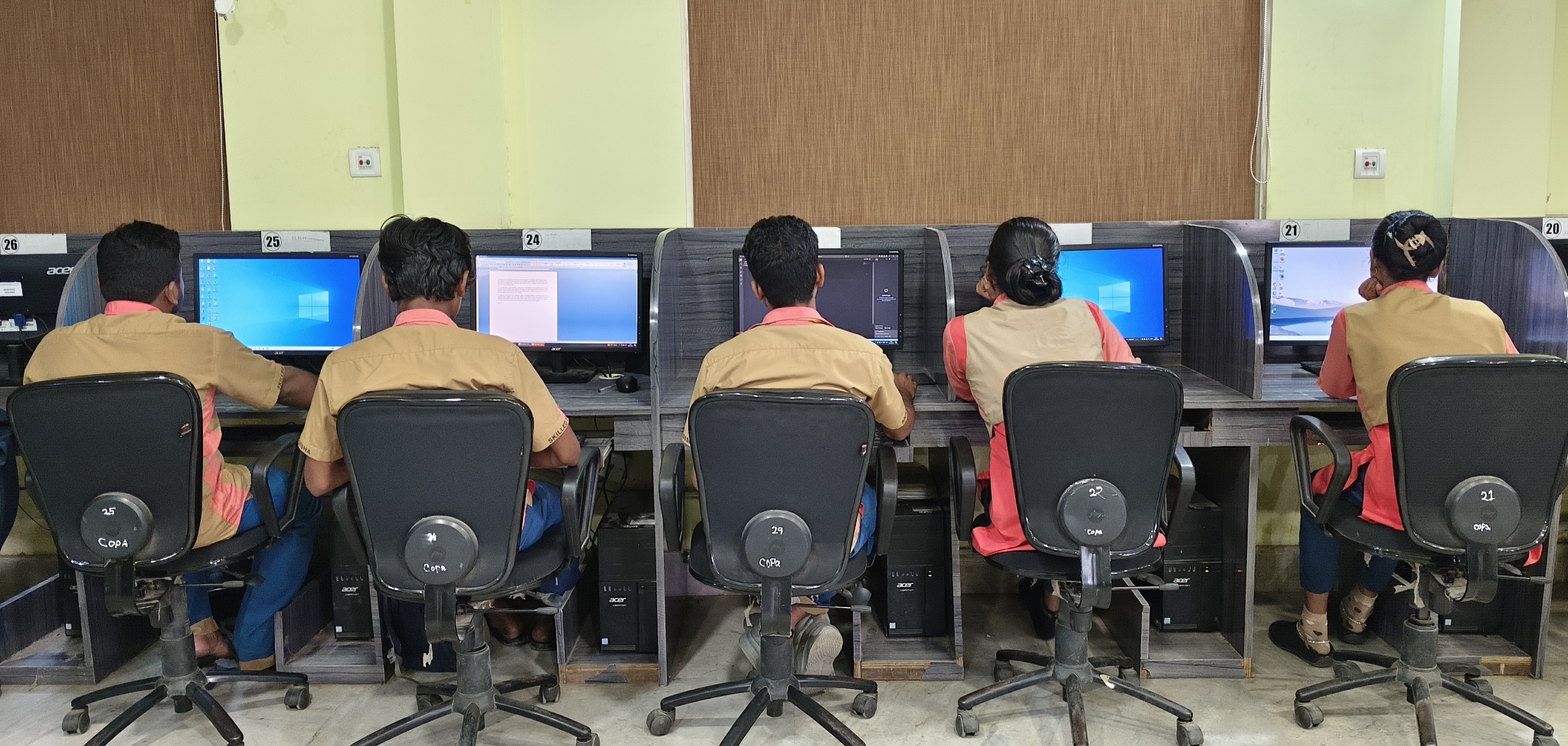
COPA is a short duration trade focusing on computer basics, office productivity and basic programming. Ideal for those who want desk jobs in offices. Core topics include operating systems such as Windows 10 or 11 and Linux Ubuntu desktop covering file management, user accounts and control panel. Microsoft Office including Word for letter, resume, table and mail merge, Excel for formula, chart, filter and pivot table, PowerPoint for presentation and animation, and Access for basic database are taught. Internet and email including web browser, search engines, email client like Outlook and Gmail, netiquette and Google Drive are covered. Typing including English typing minimum 30 WPM and Hindi typing optionally is practiced. Programming basics including algorithm, flowchart, C language covering variables, if else, loops and functions, or Python basics are taught. Database including MS Access or MySQL covering queries, forms and reports is included. Accounting including Tally ERP 9 or Prime covering creation of company, ledgers, vouchers for sales, purchase, payment and receipt, and GST basics are taught. Office equipment including photocopier, scanner, printer, fax and telephone exchange operation are covered. DTP basics including CorelDRAW and Photoshop for cropping, resizing and text are introduced. Practical skills include creating a business letter in Word with company letterhead, making a monthly expense sheet in Excel with auto sum and chart, designing a 5 slide presentation on solar energy, writing a simple C program to calculate factorial, and preparing sales invoice in Tally with GST output. Tools used include computer with Core i3 or better, MS Office, Tally software, C compiler like Turbo C or Code Blocks, scanner, printer and projector. Career options include computer operator in any office, data entry operator, junior office assistant, Tally operator in small business, and self employment for typing or printing shop.

ICTSM

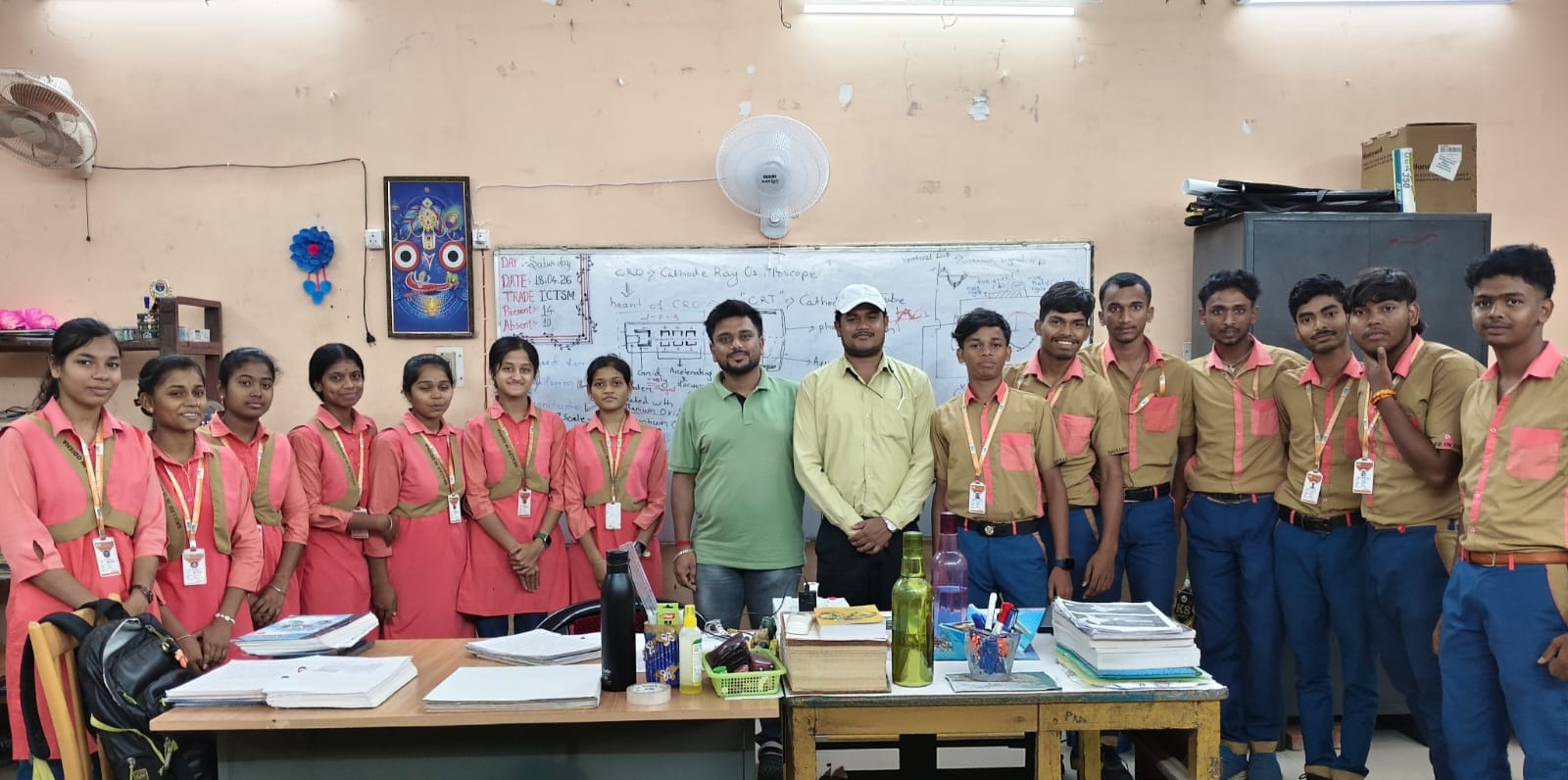
This trade often called ICT SM covers computer hardware, networking and communication systems. Students learn to install, configure and troubleshoot PCs, printers, LAN and basic servers. Core topics include computer hardware covering motherboard, CPU, RAM, HDD or SSD, SMPS and expansion cards along with assembly and disassembly. Operating systems including Windows installation, drivers, registry, and Linux basics like Ubuntu commands and dual boot are taught. Peripherals including printers like inkjet, laser and dot matrix, scanners and webcams along with troubleshooting and repair are covered. Networking including OSI model, IP addressing IPv4, subnetting, RJ45 crimping, switch, router and access point is included. Cabling covering UTP and STP, and fibre optic basics with splicing not always covered are taught. Communication systems including EPABX, intercom, CCTV analog and IP, and basic satellite communication are covered. Security including antivirus, firewall basics, data backup and recovery is included. Mobile devices including basic smartphone hardware like battery, display and charging port are covered to a limited extent. Practical skills include assembling a PC from scratch and installing Windows, crimping Ethernet cable using T568A or B standard and testing with LAN tester, configuring a small LAN with static IPs and sharing folders, installing and positioning CCTV cameras with DVR or NVR, and replacing printer pickup roller and clearing paper jam. Tools used include screwdriver set precision type, multimeter, LAN tester, crimping tool, punch down tool, loopback adapter and USB boot drive. Career options include computer hardware technician, network cabling installer, IT support in schools or offices, and CCTV installation and maintenance.

Draughtsman (Mechanical)

This is a 2 year advanced trade that focuses on creating technical drawings for mechanical components, machines and structures. Students learn to convert ideas and calculations into detailed 2D and 3D drawings that can be used for manufacturing. Core topics include engineering drawing covering orthographic projections, isometric views, sectional views, dimensioning and tolerancing. Computer aided design using software like AutoCAD, SolidWorks or CATIA is taught to create 2D drafts and 3D solid models. Material science covering properties of metals, plastics and composites is included. Production processes such as casting, forging, machining and welding are studied along with how to draw each. Geometric dimensioning and tolerancing which uses advanced symbols for precision manufacturing is also covered. Scales, symbols, building plans, machine parts, assembly drawings and bill of materials are taught. Practical skills developed include reading and interpreting blueprints, preparing detailed part and assembly drawings, using CAD software to simulate mechanical motion, and manual drafting with pencils, scales, set squares and drawing boards. Tools and equipment used include drafting board, mini drafter, CAD computers, 3D printer for prototyping, and measuring tools like vernier and micrometer. Career options include junior draughtsman in engineering firms, CAD designer, site supervisor for mechanical installations, and freelance technical illustrator.

Electrician

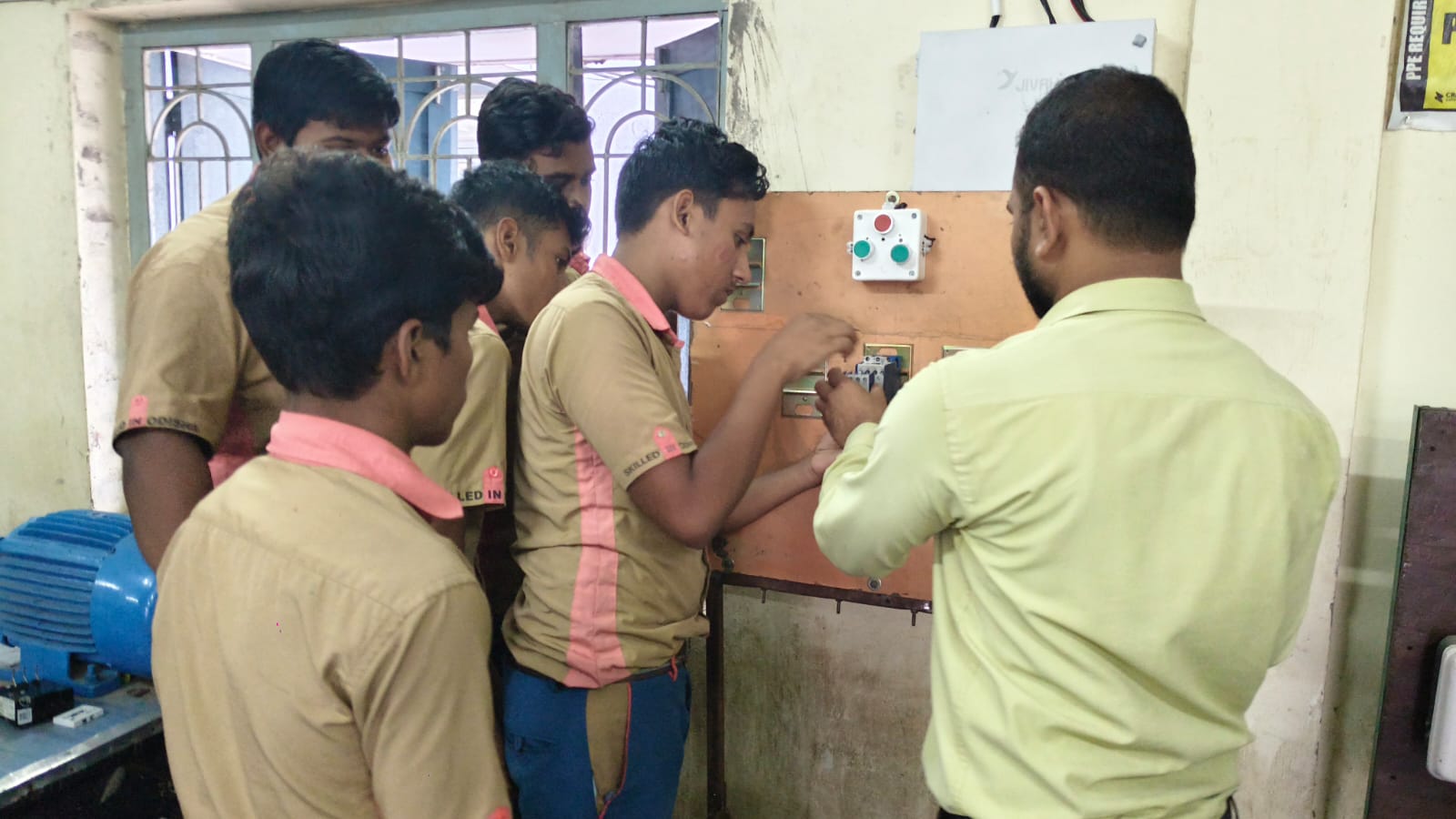
This trade trains students to install, maintain and repair electrical systems in homes, factories and commercial buildings. It covers both low voltage domestic applications and high voltage industrial applications. Core topics include basic electricity including Ohm’s law, AC and DC circuits, series and parallel connections, and power factor. Wiring systems such as surface conduit, PVC casing, concealed wiring, earthing and lighting circuits are taught. Electrical machines including single phase and three phase motors, transformers and generators are covered along with their working, starting and speed control. Domestic appliances like fans, heaters, pumps and geysers are studied for troubleshooting and repair. Measuring instruments such as ammeter, voltmeter, wattmeter, energy meter, multimeter and megger are included. Safety topics include first aid for electric shock, IS codes, fire extinguishers and lock out tag out procedures. Illumination covering types of lamps like LED, CFL and filament, as well as lighting design and street light wiring is taught. Basic electronics including diodes, transistors, relays and sensors used in automatic controls is also covered. Practical skills include reading electrical wiring diagrams, jointing and terminating cables, testing continuity, insulation resistance and earth resistance, winding small motors and transformers, installing distribution boards, MCBs, ELCBs and RCCBs, and troubleshooting open circuits, short circuits and earth faults. Tools used include combination pliers, wire stripper, crimping tool, multimeter, screwdrivers, megger, soldering iron and test lamp. Career options include wireman or electrician in housing societies, maintenance electrician in factories, helper for lift or elevator installation, and self employment as household electrician.

Electronics Mechanic

This trade focuses on electronic circuits, components and equipment. Students learn to assemble, test and repair consumer electronics, communication devices and industrial control systems. Core topics include passive components such as resistors, capacitors and inductors covering colour codes, types and uses. Active components including diodes like rectifiers, LEDs and Zener diodes, transistors like BJT and FET, and integrated circuits like 555, op amp and logic gates are taught. Power supplies covering half wave and full wave rectifiers, filters and voltage regulators such as 78xx and LM317 are included. Analog circuits like amplifiers, oscillators and timers are studied. Digital electronics including binary, logic gates, flip flops, counters, shift registers and 7 segment displays is covered. Microcontrollers such as basic Arduino or 8051 programming with sensors and actuators are introduced. Communication systems including AM and FM radio, IR remote, Bluetooth and Wi Fi modules are taught. Consumer appliances like TV, DVD player, stereo, inverter and UPS are studied with block diagrams and fault finding. Soldering and PCB design including through hole and SMD soldering, etching and using breadboard are practiced. Practical skills include soldering and de soldering components on PCBs, using oscilloscope, function generator and digital multimeter, reading circuit diagrams and datasheets, troubleshooting through voltage checks and signal tracing, and programming basic microcontrollers for simple automation. Tools used include soldering station, desoldering pump, multimeter, oscilloscope, component tester, logic probe and power supply. Career options include TV or radio repair technician, mobile phone repair with extra training, assembly line worker in electronics manufacturing, and automation maintenance in industry.

Fitter

Fitter trade is the backbone of mechanical workshops. It teaches assembling, fitting and aligning machine parts using hand tools, power tools and measuring instruments. No heavy machining is done, only hand fitting. Core topics include measurement using vernier caliper, micrometer, height gauge, dial gauge and slip gauges. Marking using surface plate, scribber, punch, divider and try square is taught. Cutting operations such as hacksawing and chiselling with flat and cross cut chisels are covered. Filing using flat, square, round and triangular files to produce flat surfaces and right angles is practiced. Drilling operations including drill machine, twist drills, countersinking and counterboring are taught. Threading using hand taps for internal threads and dies for external threads is included. Assembly of keys, splines, bearings, pulleys and gears on shafts is covered. Basic hydraulics and pneumatics including cylinders, valves and circuits are introduced. Basic piping and plumbing such as pipe threading and G I pipe fitting are also taught. Practical skills include reading assembly and part drawings, preparing job layout on metal block, performing drilling, reaming and tapping operations, checking flatness, perpendicularity and alignment, and dismantling and reassembling a centrifugal pump or small gearbox. Tools used include vernier caliper, steel rule, try square, files, hack frame, tap and die set, bench vice, drill press and bench grinder. Career options include fitter in automotive, pump or valve industry, maintenance fitter in a factory, workshop helper for lathe or milling machines, and rail wagon or heavy equipment fitter.

Machinist

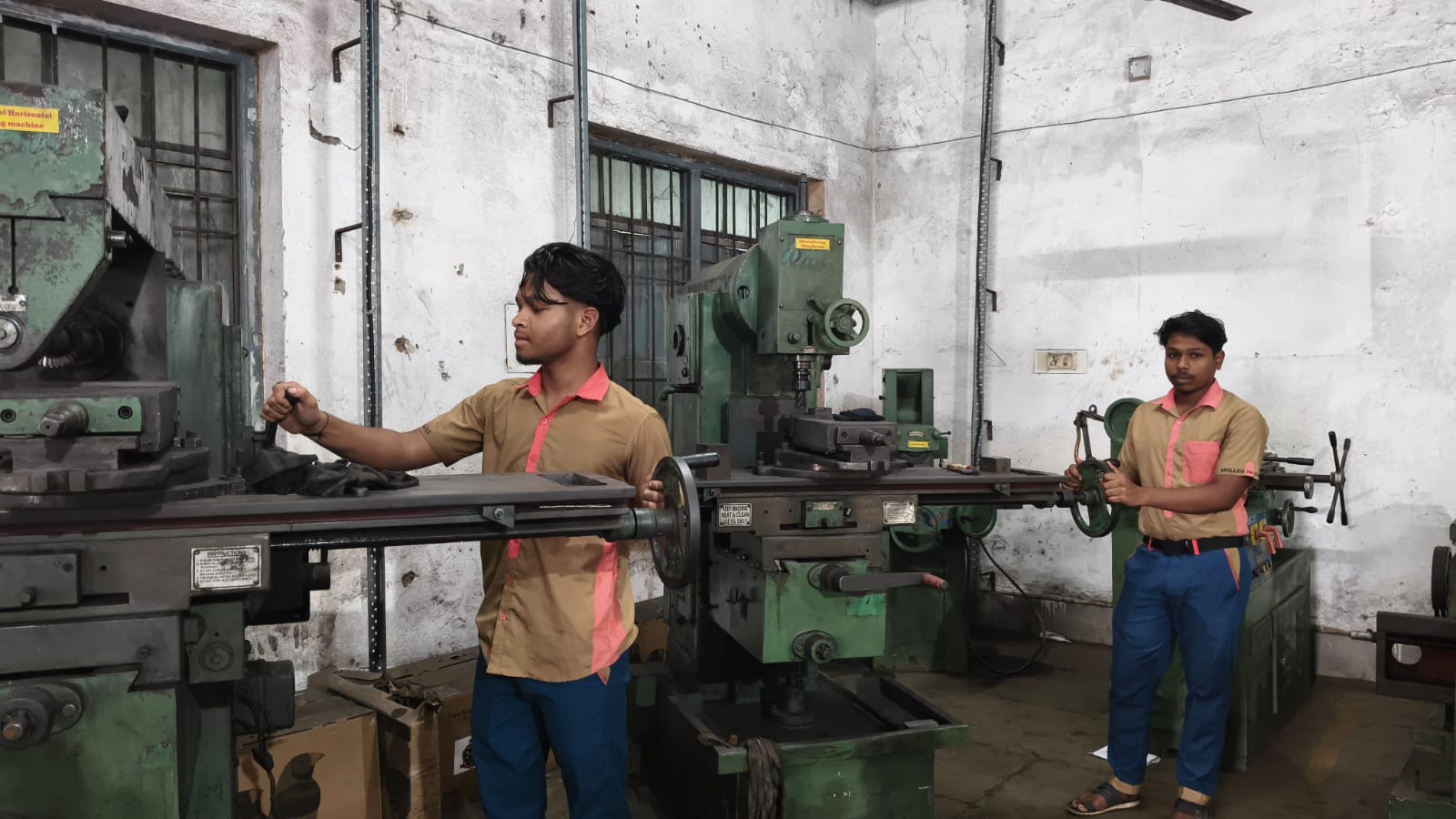
Machinist trade teaches operating machine tools to produce precise metal parts. While fitter works by hand, the machinist uses lathes, milling machines and grinders. Core topics include lathe machine operations such as turning, facing, taper turning, knurling, threading, boring and parting off. Milling machine operations including plain milling, face milling, slot cutting and gear cutting using dividing head are covered. Drilling and boring using radial drill and jig boring are included. Grinding using surface grinder, cylindrical grinder and tool and cutter grinder along with wheel selection and dressing is taught. Cutting tool geometry covering rake, clearance, tool materials like HSS and carbide is studied. Work holding using chucks, collets, faceplate, mandrel, vices and clamps is covered. Precision measurement using vernier, micrometer, dial bore gauge, slip gauges and surface finish comparator is included. CNC basics such as introduction to G code and CNC lathe or mill operation is often part of advanced module. Practical skills include setting up job and tool on lathe or milling machine, producing components within tolerance of plus or minus 0.02 mm, selecting cutting speed, feed and depth of cut, sharpening drill bits and lathe tools on pedestal grinder, and preparing simple CNC programs if available. Tools used include engine lathe, turret lathe, vertical and horizontal milling machine, surface grinder, vernier, micrometer and dial gauge. Career options include lathe or milling machine operator, CNC machine operator after additional course, toolroom machinist, and jobber in small scale engineering workshop.

Mechanic Motor Vehicle

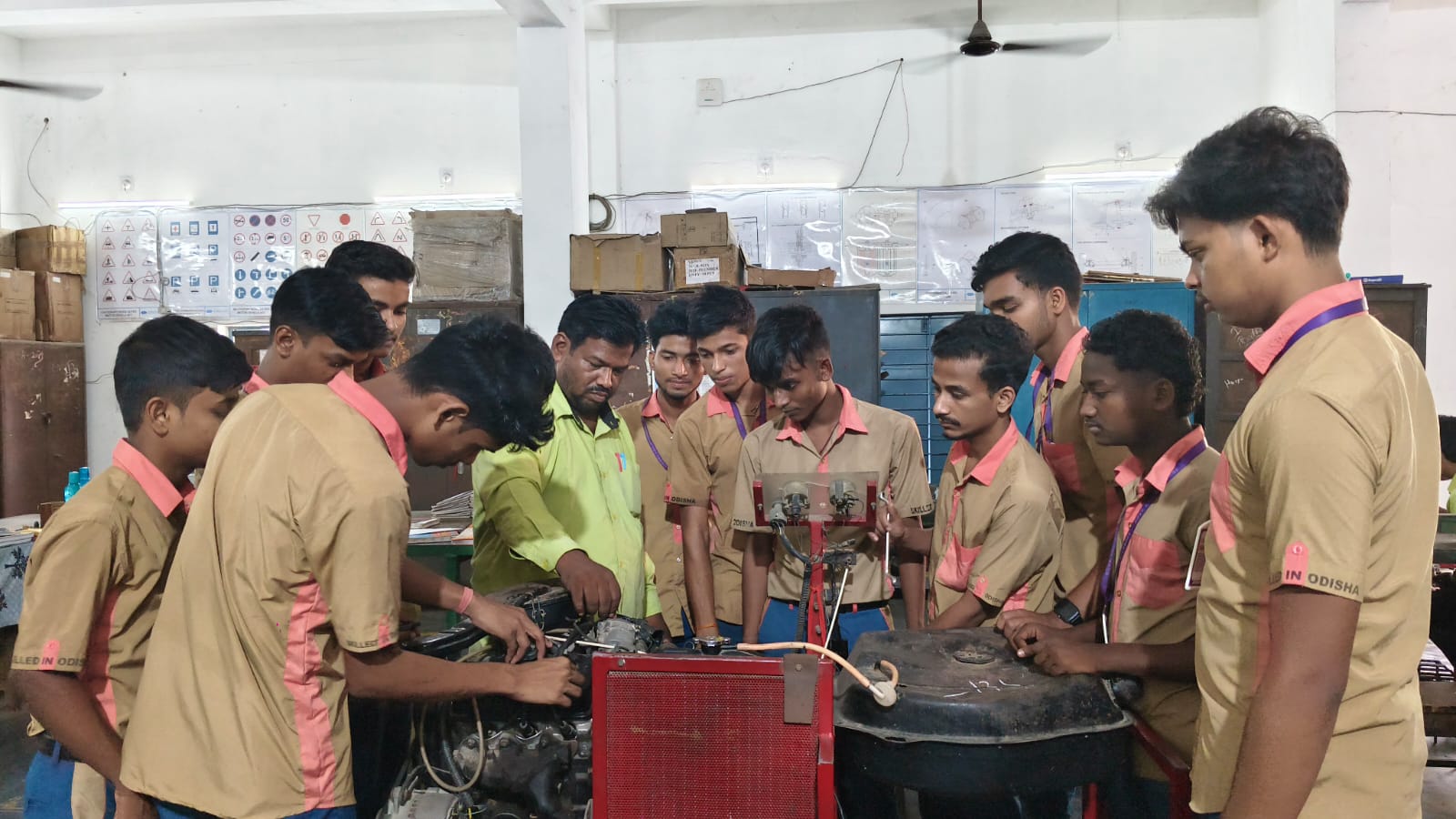
Commonly called MMV, this trade covers petrol and diesel vehicles such as cars, jeeps and light commercial vehicles. Focus is on repair and maintenance of all mechanical and electrical systems. Core topics include engine covering 2 stroke and 4 stroke, SI and CI engines, engine parts like piston, rings, cylinder head, valves, camshaft, crankshaft, cooling and lubrication systems. Fuel system including carburetor for petrol, fuel injection like MPFI and CRDi for diesel, pumps, filters and injectors are taught. Transmission including clutch, gearbox manual and synchromesh, differential, propeller shaft and axle is covered. Brakes covering drum, disc, hydraulic brakes and air brakes in heavy vehicles along with brake bleeding are included. Steering and suspension including steering gear, rack and pinion, tie rods, shock absorbers and leaf springs are taught. Electricals including battery, alternator, starter motor, wiring, lights and horn are covered. Vehicle maintenance including periodic servicing and trouble diagnosis for engine noise, smoke and vibration is included. Emission control covering catalytic converter, PCV valve and EGR is also taught. Practical skills include dismantling and assembling a four stroke engine, servicing carburetor and replacing fuel filter, overhauling clutch and brake assembly, wheel balancing and alignment basics, and using diagnostic tools like multimeter, compression tester and vacuum gauge. Tools used include ring spanner set, socket set, torque wrench, piston ring compressor, feeler gauge, timing light and OBD scanner basic. Career options include motor vehicle mechanic in a workshop, service centre technician in Maruti or Hyundai, driving school vehicle maintenance, and self owned garage.

Mechanic Electric Vehicle

This is a modern trade focused on electric two wheelers, three wheelers and cars. Students learn high voltage safety, battery technology, motor controllers and EV specific systems. Core topics include EV fundamentals covering difference between EV and IC engine, and types like BEV, HEV and PHEV. High voltage safety including PPE such as insulated gloves and mat, rescue procedures and isolation techniques are taught. Battery technology covering lithium ion, lead acid and LiFePO4, cell balancing, battery management system BMS, and charging protocols constant current constant voltage are included. Electric motors including BLDC hub motor, PMSM and AC induction motor along with working and Hall sensors are covered. Motor controller including PWM, MOSFET and IGBT based controllers and regenerative braking are taught. EV chargers covering level 1, level 2 and DC fast charging along with connectors like type 2, CCS and CHAdeMO are included. Diagnostics including CAN bus basics, diagnostic scan tools for EVs and thermal management are covered. EV maintenance including battery pack inspection, contactor replacement, motor bearing check and software updates are taught. Practical skills include safely disconnecting and reconnecting high voltage circuits, measuring cell voltages and internal resistance, replacing a BLDC hub motor on an e scooter, updating controller firmware, and performing insulation resistance test using a megohmmeter rated 500V or 1000V. Tools used include insulated tools with VDE certification, multimeter with CAT III rating, insulation tester or megger, EV scan tool and battery cell balancer. Career options include EV service technician for Ola, Ather or Tata EV, battery pack assembler, charging station maintenance, and EV conversion workshop helper.

R&AC Technician

RAC trade trains students in domestic refrigerators, window and split air conditioners, water coolers and commercial cold storage. Focus is on vapour compression refrigeration cycle and handling refrigerants safely. Core topics include refrigeration cycle covering evaporator, compressor, condenser and expansion device such as capillary tube or thermostatic expansion valve. Refrigerants including R134a, R22, R410A and R32 along with properties, ODP, GWP, refrigerant recovery and recycling are taught. Compressors including hermetic, semi hermetic, rotary, reciprocating and scroll types are covered. System components such as filter drier, accumulator, oil separator, solenoid valve and pressure switches are included. Electrical controls including thermostat, overload protector, PTC or current relay, capacitor and fan motor are taught. Air conditioning covering window AC, split AC with indoor and outdoor unit, ductable and VRF basics are included. Tools and practices such as brazing using silver alloy, leak detection using soap water or electronic leak detector, evacuation using vacuum pump, and charging by gas weighing are covered. Maintenance including cleaning condenser and evaporator coils, checking gas pressure, and troubleshooting no cooling, low cooling or high current are taught. Practical skills include brazing copper tubes with nitrogen purging, using manifold gauge set to read pressures and calculate superheat and subcooling, recovering refrigerant into a recovery cylinder, leak testing and vacuum pulling down to 500 microns, and changing compressor and filter drier. Tools used include manifold gauge set, vacuum pump, electronic leak detector, refrigerant scale, tube cutter, flaring tool, brazing torch and multimeter. Career options include AC repair technician for home or commercial use, refrigerator mechanic, cold storage maintenance helper, and self employed service provider.

Turner

Turner trade is a specialised version of machinist focusing almost entirely on lathe machines, producing cylindrical jobs like shafts, rods, pins and threaded components. Core topics include lathe components such as bed, headstock, tailstock, carriage, leadscrew, feed rod, chuck and steady rest. Turning operations including plain turning, step turning, taper turning using compound rest and offset tailstock method, grooving and parting off are taught. Thread cutting for metric and BSW threads using thread chasing dial, setting gear train, and cutting external and internal threads is covered. Drilling on lathe using tailstock with drill chuck including drilling, reaming and boring is included. Knurling including straight and diamond knurling for grips is taught. Lathe maintenance covering lubrication, checking alignment and adjusting bearings is covered. Workpiece materials including mild steel, cast iron, brass and aluminium with different cutting speeds are studied. Measuring using outside micrometer, inside micrometer, vernier, thread pitch gauge and radius gauge is included. Practical skills include mounting job between centres or in three jaw chuck, selecting correct turning tool made of HSS or carbide insert and setting tool height, cutting a 20 mm diameter step shaft with tolerance plus or minus 0.02 mm, cutting a 1.5 mm pitch metric thread on a mild steel rod, and producing a taper of 10 degrees using compound rest. Tools used include centre lathe conventional type, high speed steel tools shaped on grinder, micrometer, screw pitch gauge and bench grinder for tool sharpening. Career options include turner in automobile parts manufacturing, lathe machine operator in job shops, workshop supervisor after experience, and pumps and valves industry.

Wireman

Wireman trade is more practical than theory and focuses on electrical wiring for residential, commercial and industrial installations. It is a licensed trade in many states for electrical contracting. Core topics include wiring systems such as cleat wiring, batten wiring, PVC conduit wiring, metal conduit wiring and trunking. Switches and accessories including one way, two way, intermediate, bell push, socket outlet, holder and ceiling rose are taught. Circuit layouts including staircase wiring, godown wiring, corridor lighting, hospital call bell and fire alarm are covered. Distribution boards covering single phase and three phase DB with MCB, RCCB, SPD and busbar arrangement are included. Earthing including plate earthing, pipe earthing, earthing conductor size and earth resistance measurement is taught. Cable jointing including straight joint, tee joint, Britannia joint for overhead lines, and heat shrink and tape insulation are covered. Electricity meter installation including energy meter digital and electromechanical, and CT and PT metering for HT basics are included. Safety regulations including IE Rules, Indian Electricity Act, use of rubber mat and insulated tools are taught. Practical skills include drawing wiring diagrams for a room with one light, one fan and two sockets, bending and cutting PVC conduit and pulling wires, making proper termination using ferrules and cable lugs, testing earth continuity and polarity, and replacing a damaged MCB and connecting wires in DB. Tools used include armoured pliers, combination pliers, insulated screwdrivers, voltage tester, multimeter, earth tester, conduit bender and wire stripper. Career options include licensed wireman after passing exam, electrical contractor after experience, industrial electrician helper, and solar panel wiring assistant

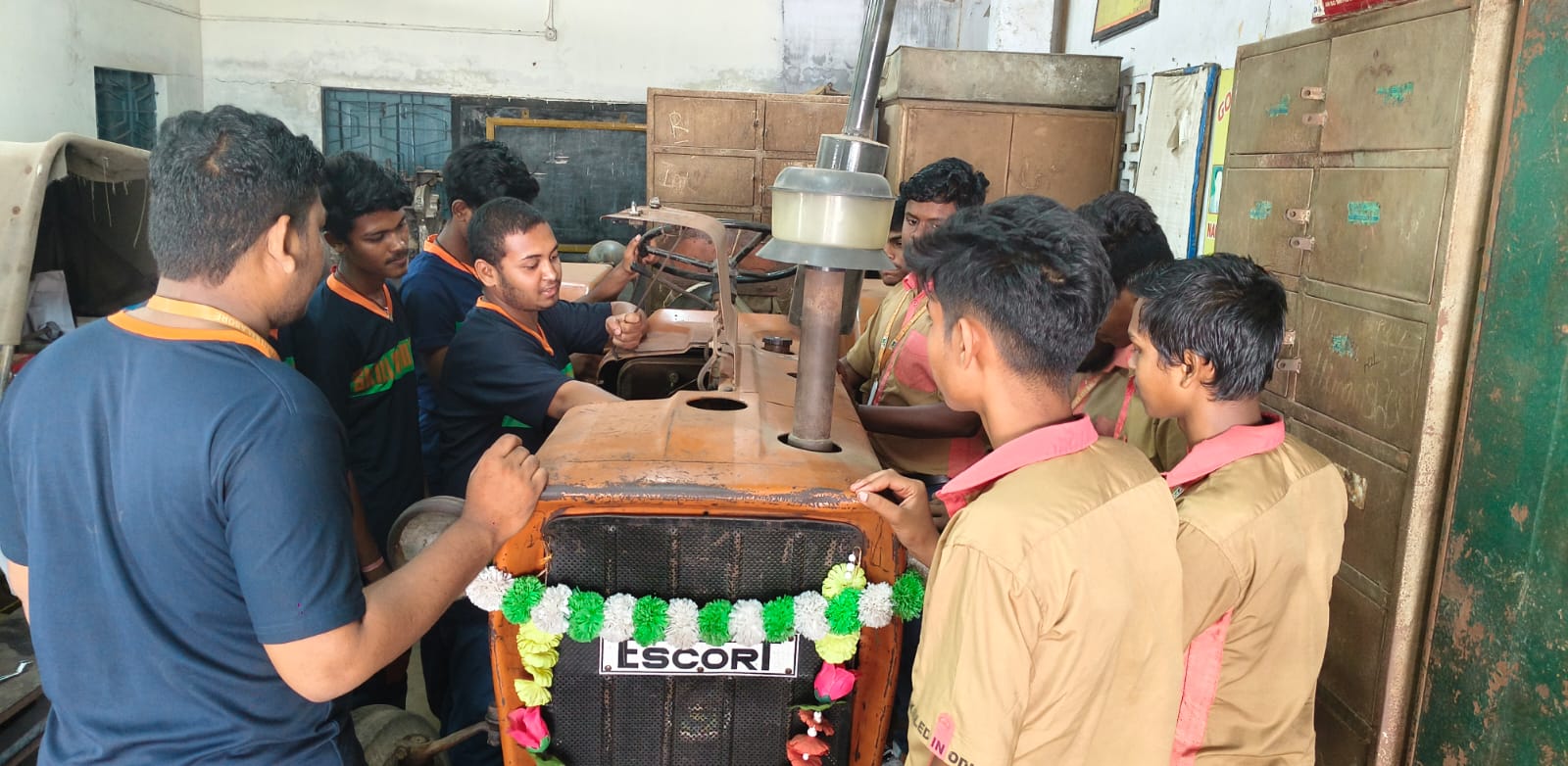
Mechanic (Tractor)

Specialised in agricultural tractors like Mahindra, Swaraj and John Deere. Covers tractor engine, transmission, hydraulics and implements such as cultivator, plough and harrow. Core topics include tractor engine which is a high torque low speed diesel engine with wet or dry cylinder liners and balancer shaft. Fuel system including inline injection pump, rotary pump, injectors and fuel filters with water separator are taught. Transmission including sliding mesh or constant mesh gearbox, multi speed power take off PTO, and differential lock is covered. Hydraulics including hydraulic lift with control valve, piston pump, cylinder and three point linkage category I or II are included. Wheels and tyres including agricultural tyre tread patterns, ballasting and rim removal are taught. Electricals including starter motor, alternator, tractor lighting and flasher are covered. Implements including disc plough, MB plough, cultivator, rotavator and trailer along with attachment and maintenance are included. Tractor maintenance including changing engine oil, oil filter, cleaning air cleaner dry or oil bath type, and clutch adjustment are taught. Practical skills include removing and refitting tractor rear wheel rim, bleeding air from diesel fuel system, adjusting clutch pedal free play, changing hydraulic oil and cleaning suction filter, and overhauling a single acting hydraulic cylinder. Tools used include heavy duty socket set up to 32 mm, torque wrench, wheel puller, injector tester, hydraulic pressure gauge and diesel compression tester. Career options include farm mechanic or tractor repairer, tractor dealership service centre, agricultural equipment maintenance, and self employed mobile tractor repair.

Mechanic Diesel

Diesel Mechanic trade covers diesel engines used in trucks, buses, tractors, generators and earthmoving equipment. More in depth than MMV for diesel systems. Core topics include diesel engine working covering compression ignition, high compression ratio, and direct or indirect injection. Engine parts including cylinder head, valves, camshaft, pushrod, rocker arm, piston with bowl shape, rings, connecting rod, crankshaft and flywheel are taught. Lubrication system including gear pump, full flow filter, bypass filter, oil cooler and pressure relief valve are covered. Cooling system including radiator, water pump, thermostat, fan belt tension and coolant mixture are included. Fuel injection including inline fuel injection pump Bosch type, DPA pump Lucas type, unit injector, and common rail CRDi basics are taught. Turbocharger including working, wastegate, intercooler and bearing maintenance are covered. Exhaust system including EGR valve and diesel particulate filter DPF with simple understanding are included. Compressed air system including air compressor engine driven, air dryer and brake chambers for heavy vehicles are taught. Engine troubleshooting including hard starting, white, black or blue smoke, lack of power and overheating are covered. Practical skills include removing injectors and testing spray pattern on a pop tester, checking valve clearance or tappet adjustment, replacing a worn out piston ring set in an overhaul, testing cylinder compression using a diesel compression gauge, and setting injection pump timing. Tools used include diesel compression tester, injector pop tester, spanners in MM sizes, ring compressor, valve spring compressor and DTI gauge. Career options include diesel mechanic in bus depot or truck workshop, generator service technician, construction equipment mechanic for JCB or backhoe, and workshop helper for marine diesel engines.

Plastic Processing Operator

This trade focuses on manufacturing plastic products by injection moulding, blow moulding, extrusion and compression moulding. Common in bottle, container, pipe and automotive parts industry. Core topics include plastic types covering thermoplastics like PE, PP, PVC, PS, PET and ABS, and thermosets. Material identification by burn test, density and appearance is taught. Injection moulding including machine parts like hopper, screw or plunger, barrel, heaters, mould and clamping unit, and cycle including plastication, injection, packing, cooling and ejection are covered. Process parameters including temperature zones such as rear, middle, front and nozzle, injection pressure, holding pressure, back pressure, screw RPM and cooling time are included. Blow moulding including extrusion blow moulding for bottles and injection blow moulding along with parison formation and blowing are taught. Extrusion including pipe, profile and sheet extrusion along with die design, haul off and cutting are covered. Mould maintenance including cleaning, applying mould release spray and repairing damaged threads are included. Quality control including visual defects such as sink mark, flash, short shot and weld line, weighing and dimensional check are taught. Safety including hot machine surfaces, material drying to avoid moisture degradation and ventilation are covered. Practical skills include setting up an injection moulding machine with a two plate mould, adjusting clamping force and ejection stroke, changing barrel and nozzle temperature while monitoring melt temperature, collecting and regrinding runners, and measuring part dimensions using vernier calliper and comparing with specification. Tools used include injection moulding machine of 20 to 100 ton, blow moulding machine, extruder, material dryer desiccant or hot air type, mould temperature controller and crane for mould change. Career options include injection moulding machine operator, extrusion line operator for pipes or profiles, quality inspector in plastic factory, and helper in recycling unit for regrinding.

Solar Technician

Solar Technician trade trains for installation, commissioning and maintenance of solar PV photovoltaic systems, both off grid with battery and on grid grid tied. Electrical background is important. Core topics include solar PV fundamentals covering photovoltaic cell, module and array, and types like monocrystalline, polycrystalline and thin film. Solar radiation including peak sun hours, tilt angle, orientation, shading analysis and irradiance measurement using pyranometer are taught. Balance of system including mounting structures for RCC, GI and aluminium, DC cables, AC cables, connectors MC4 type, junction boxes and surge protective devices SPD are covered. Charge controllers including PWM and MPPT along with working, selection, wiring and setting parameters are included. Batteries including lead acid tubular and VRLA, and lithium ion NMC and LFP along with charging algorithm, depth of discharge and battery sizing are taught. Inverters including off grid inverter square wave, modified sine wave and pure sine wave, on grid inverter string inverter and microinverter, and hybrid inverter are covered. Net metering for on grid systems including bidirectional meter and export import accounting is included. Protection including DC MCB, AC MCB, DC fuse, earthing of array and inverter, and lightning arrestor are taught. Maintenance including cleaning panels, checking voltage and current, thermal imaging for loose connections and battery water topping are covered. Practical skills include connecting solar panels in series or parallel to achieve desired voltage and current, crimping MC4 connectors and testing polarity, installing a simple off grid home lighting system with 2 panels, charge controller, battery and LED lights, measuring Voc open circuit voltage and Isc short circuit current with multimeter, and configuring MPPT charge controller for lithium battery. Tools used include solar PV multimeter with DC clamp meter, irradiance meter, MC4 crimper, spanner set, insulation resistance tester and battery hydrometer. Career options include solar PV installer for rooftop, solar pump technician, maintenance of solar street lights, and sales or technical support for solar EPC companies.

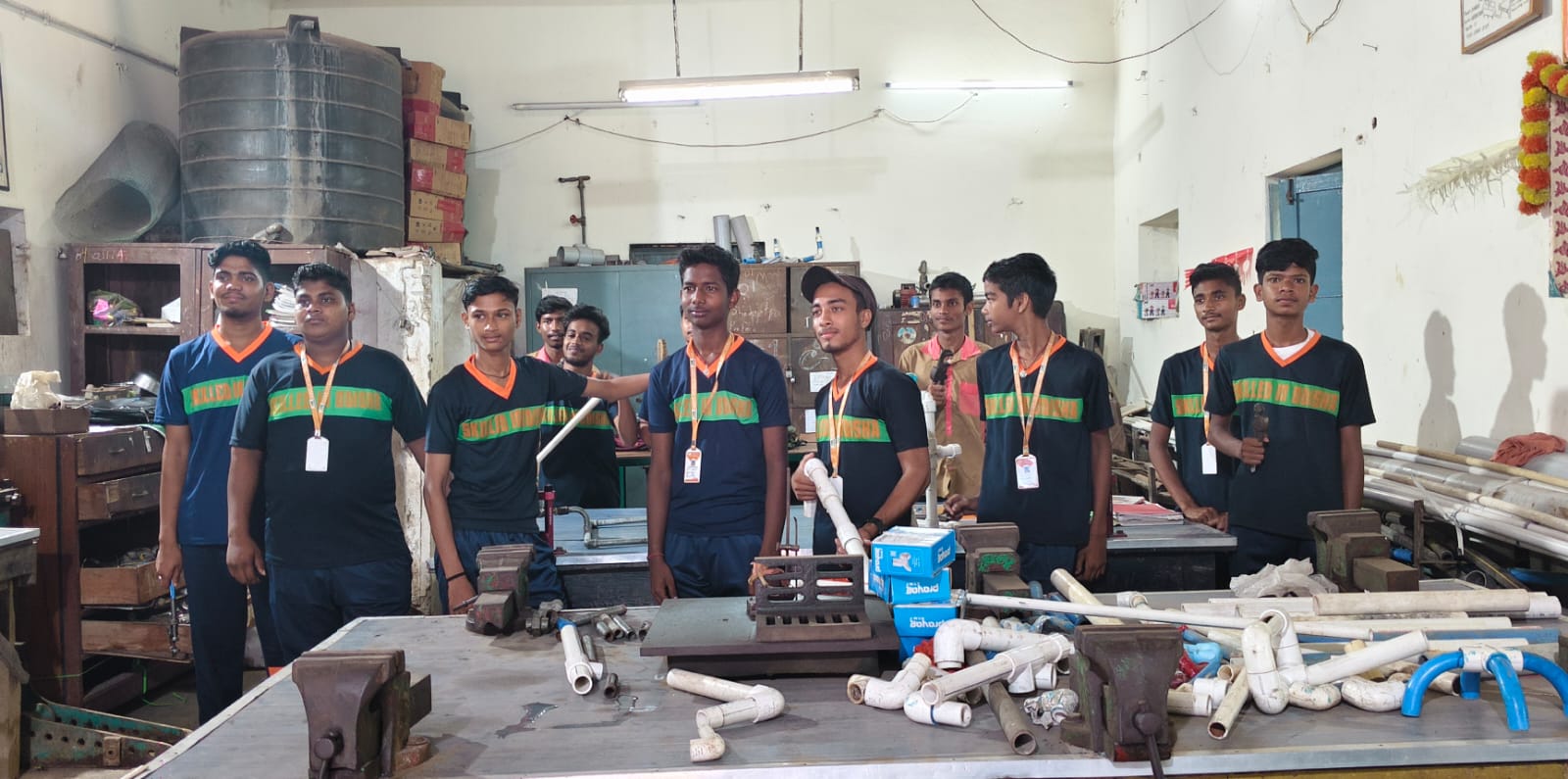
Plumber

Plumbing trade covers water supply, drainage, sanitary fittings and pipe joining for houses, buildings and industrial lines. Combines theory of fluid flow with practical welding and threading of pipes. Core topics include pipe materials such as GI galvanised iron, PVC, CPVC, PPR, copper, HDPE and concrete pipes. Pipe joining methods including threaded joints for GI, solvent cement for PVC and CPVC, socket fusion for PPR, soldering for copper and flanged joints are taught. Pipe fittings including elbow, tee, coupling, reducer, union, nipple, bend, trap like P trap and S trap, and floor trap are covered. Water supply system including overhead tank to distribution covering branch lines, riser, main line, water meter, stop valve, gate valve, ball valve and non return valve NRV are included. Sanitary drainage including soil pipe, waste pipe and vent pipe along with slope calculation, inspection chambers, manholes and septic tank are taught. Plumbing fixtures including water closet WC with Indian and European types, wash basin, sink, shower and urinal along with installation and trap connection are covered. Water heaters including geyser installation for electrical and gas geysers, and pressure relief valve are included. Basic pumping including single stage centrifugal pump covering connection, priming and foot valve is taught. Tools and safety including pipe vice, pipe wrenches, hacksaw, threader, bench grinder, safety goggles and leak testing are covered. Practical skills include threading GI pipe manually using die stock and cutting oil, making a PVC pipe joint using solvent cement with cleaning, primer and glue, installing a wash basin with bottle trap and flexible connector, checking slope of drainage line using spirit level and water test, and replacing a leaking tap washer which is a jumper valve. Tools used include pipe wrench Stillson type, adjustable spanner, pipe cutter wheel type, threading die set, chain vice, basin wrench and hacksaw. Career options include plumber for new building construction, maintenance plumber in hotels or housing societies, bathroom and kitchen fitting installer, and self employed plumbing contractor.

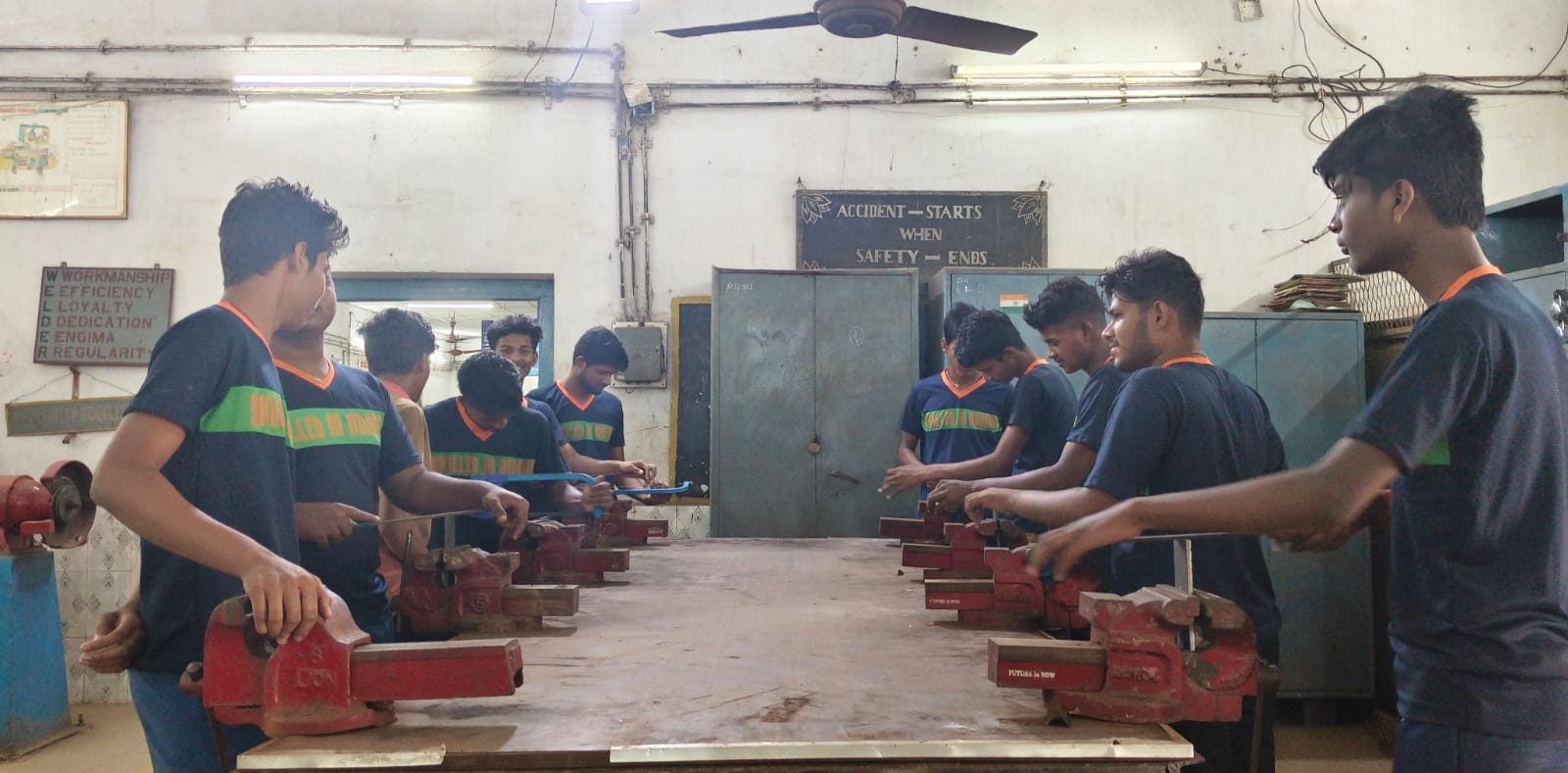
Welder

Welder trade focuses on joining metal parts using heat and filler material. Students learn arc welding, gas welding and basic cutting processes. Core topics include welding safety covering welding helmet or shield, gloves, apron, leather sleeves, fume extraction and fire prevention. Arc welding using SMAW covering welding machine AC and DC transformer or rectifier, electrodes like E6013, E6010 and E7018, and polarity DCEP or DCEN are taught. Weld joints and positions including butt joint, lap joint, T joint, corner joint and edge joint, and positions flat, horizontal, vertical and overhead are covered. Electrode selection for mild steel, stainless steel and cast iron along with composition, flux coating and storage in oven is included. Welding defects such as slag inclusion, porosity, undercut, spatter and incomplete fusion along with causes and remedies are taught. Gas welding using oxy acetylene equipment including cylinders, regulators, hoses and torch along with neutral, oxidising and carburising flame are covered. Cutting processes including oxy acetylene cutting, plasma cutting basics and grinding wheel cut off are included. Basic metallurgy including heat affected zone HAZ, preheating and post heating for thick plates are taught. Other processes like MIG and TIG are introduced if institute has equipment. Practical skills include striking an arc and maintaining correct arc length, running a straight bead on mild steel plate in flat position, making a lap joint with two passes, welding a 3 mm thick plate in vertical position using weaving technique, oxy acetylene cutting of 10 mm thick steel plate, and chipping slag and cleaning weld with wire brush. Tools used include arc welding machine of 200 amps, welding electrode holder, earth clamp, chipping hammer, wire brush, welding helmet auto darkening or fixed shade, goggles for gas welding and gas torch. Career options include structural welder for building or bridge, fabrication workshop helper, pipe welder with additional training, and self employed welder for gate, window and railing fabrication.

ITI Campus
COPA TRADE
Workshop
ICTSM TRADE
Training
Mechanic (Tractor) TRADE
Training
PLUMBER TRADE
Training
WELDER TRADE
Training
R&AC TRADE
Training
M.M.V TRADE
Training
WELDER TRADE
Training
WELDER TRADE

Master Your Future with Employability Skills (E.S)

Empowering Government ITI Balasore students with world-class soft skills, corporate readiness, and leadership training in exclusive partnership with Tata Strive.

What Are Employability Skills & Why Do They Matter?

In today's highly competitive global job market, possessing core technical knowledge related to your specific ITI trade is only half the journey. The other crucial half, which often determines whether you get hired, promoted, or selected by top Multinational Corporations (MNCs), is your arsenal of "Employability Skills." Often referred to as soft skills, life skills, or core competencies, these are the non-technical skills that dictate how you interact with colleagues, solve problems, manage your time, and adapt to the ever-changing workplace environment.

At Government ITI Balasore, we recognize that our students are exceptionally talented in their respective trades. However, to bridge the gap between technical brilliance and corporate expectations, we have integrated a mandatory and highly intensive Employability Skills (E.S) program into our curriculum. This program is not just about passing an exam; it is about transforming our trainees into well-rounded, confident, and professional individuals ready to take on the world.

The Tata STRIVE Advantage

We take immense pride in sharing that the Employability Skills classes at our campus are conducted in collaboration with Tata STRIVE, the prestigious skill development initiative of the Tata Community Initiatives Trust. Tata Strive brings decades of corporate excellence and a scientifically designed pedagogy to the classroom.

Unlike traditional rote-learning methods, Tata Strive facilitators utilize highly interactive sessions, experiential learning, role-plays, group discussions, and multimedia presentations. This engaging environment ensures that students do not just memorize concepts but actually practice and internalize them. Being trained by a legacy brand like Tata significantly boosts the morale of our students and adds a highly recognized credential to their professional portfolios.

Core Modules Covered in E.S Classes

The E.S curriculum is meticulously crafted to cover every aspect of professional and personal growth. The training encompasses the following key modules:

  • Communication Skills & Spoken English: Overcoming the fear of public speaking, mastering the art of active listening, understanding non-verbal communication (body language), and learning to speak and write confidently in professional English.
  • Digital Literacy & IT Skills: In the digital age, computer literacy is non-negotiable. Students learn essential tools like MS Word, Excel, PowerPoint, safe internet browsing, email etiquette, and cyber security basics.
  • Interview Preparation & Resume Building: Step-by-step guidance on crafting an attractive Resume/CV, participating in mock interviews, understanding what HR managers look for, and learning how to negotiate and present oneself during recruitment drives.
  • Financial & Legal Literacy: Educating students on personal finance management, the banking system, savings, insurance, investments, and basic awareness of labor laws and workplace rights.
  • Entrepreneurship Skills: Fostering a business mindset. Students learn how to identify market opportunities, understand risk management, arrange funding, and the basics of setting up their own enterprise or startup after completing their ITI course.

Top Benefits of Attending E.S Classes

🚀 100% Interview Readiness

Mock interviews and HR training eliminate hesitation, ensuring students crack MNC placement drives with ease.

💡 Massive Confidence Boost

Regular stage presentations and group discussions permanently remove stage fright.

🤝 Teamwork & Leadership

Students learn conflict resolution, empathy, and how to lead in diverse team environments.

🛡️ Stress Management

Practical techniques to handle workplace pressure and meet strict deadlines.

A Message to Our Students

"Your trade skill gets you the interview, but your employability skill gets you the job. Never miss your Tata Strive E.S classes. They are the golden key to a successful, lifelong career."

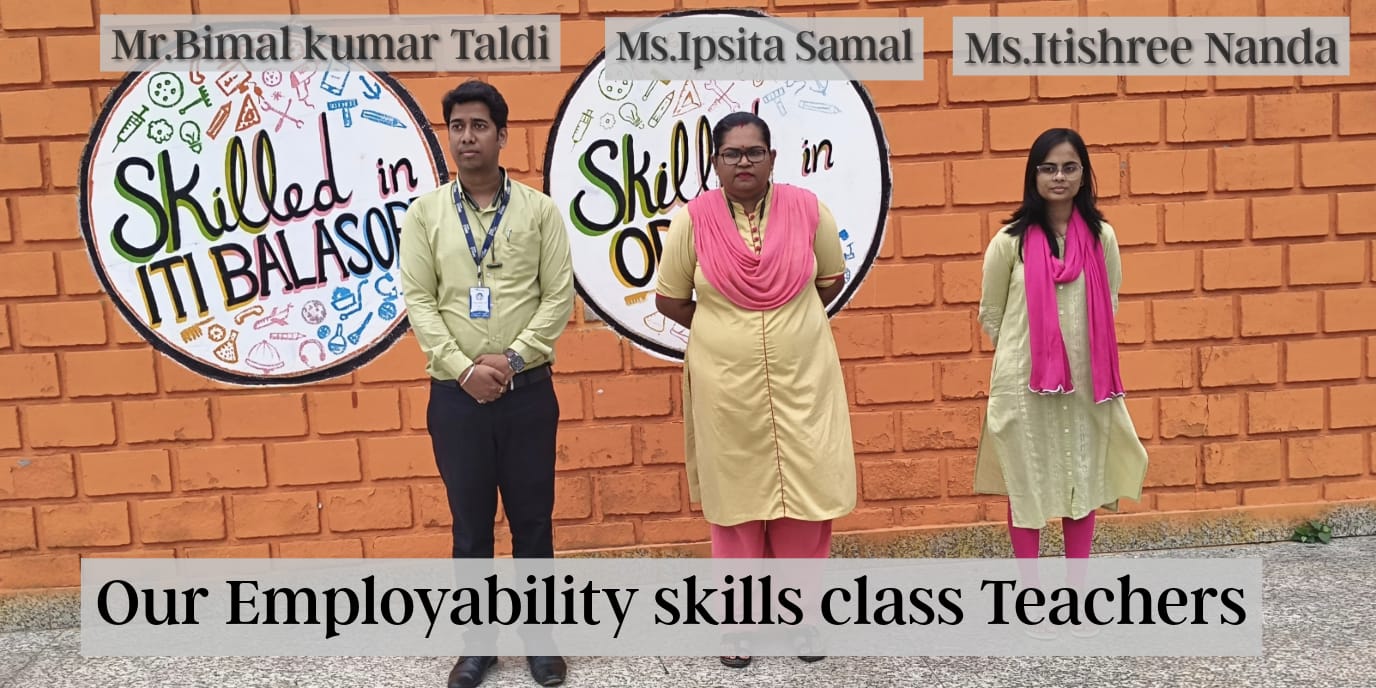
Our E.S Facilitators

Mr.bimal Kumar Taldi

Tata Strive Facilitator

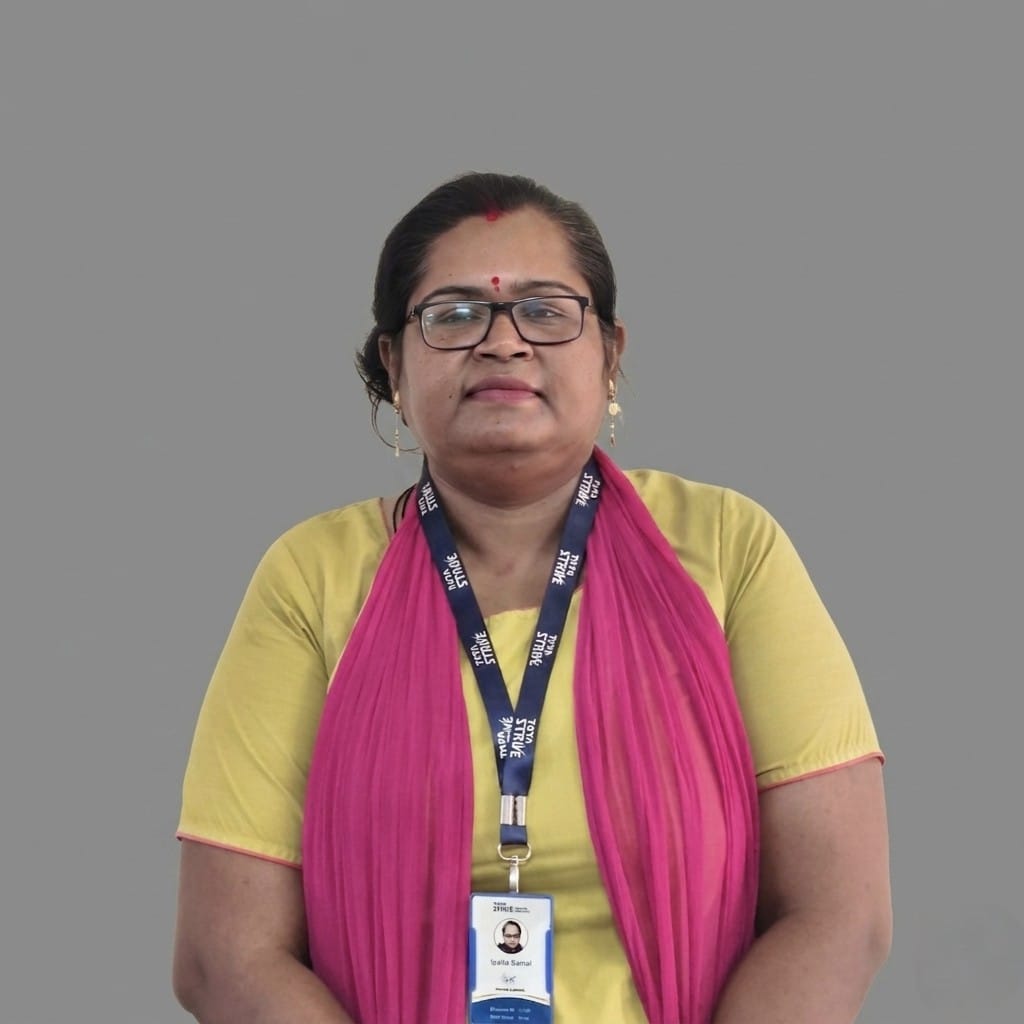
Ms.Ipsita Samal
Ms.Ipsita Samal

Tata Strive Facilitator

Ms.Itishree Nanda
Ms.Itishree Nanda

Tata Strive Facilitator

Explore Our Campus & Trade Workshops

📸 Explore Trades Gallery

Explore OUR Employability Skills Classes

📸 Explore E.S Class Gallery

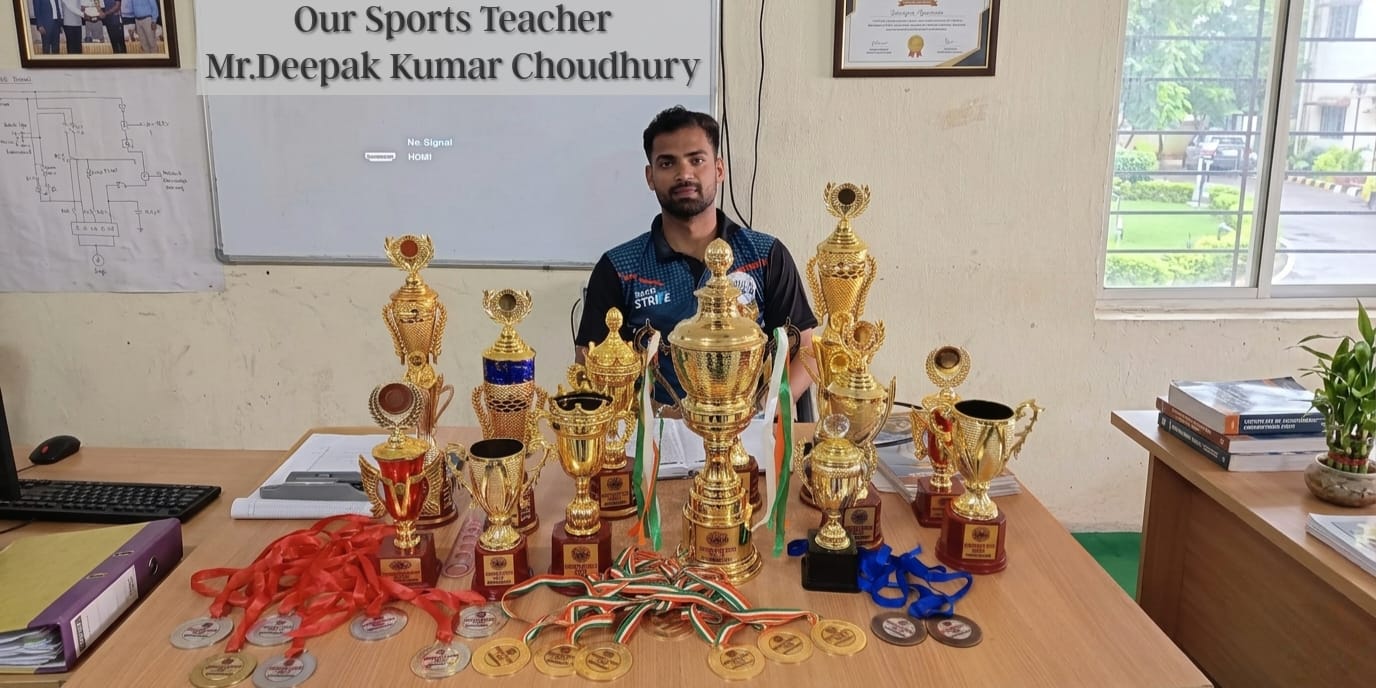
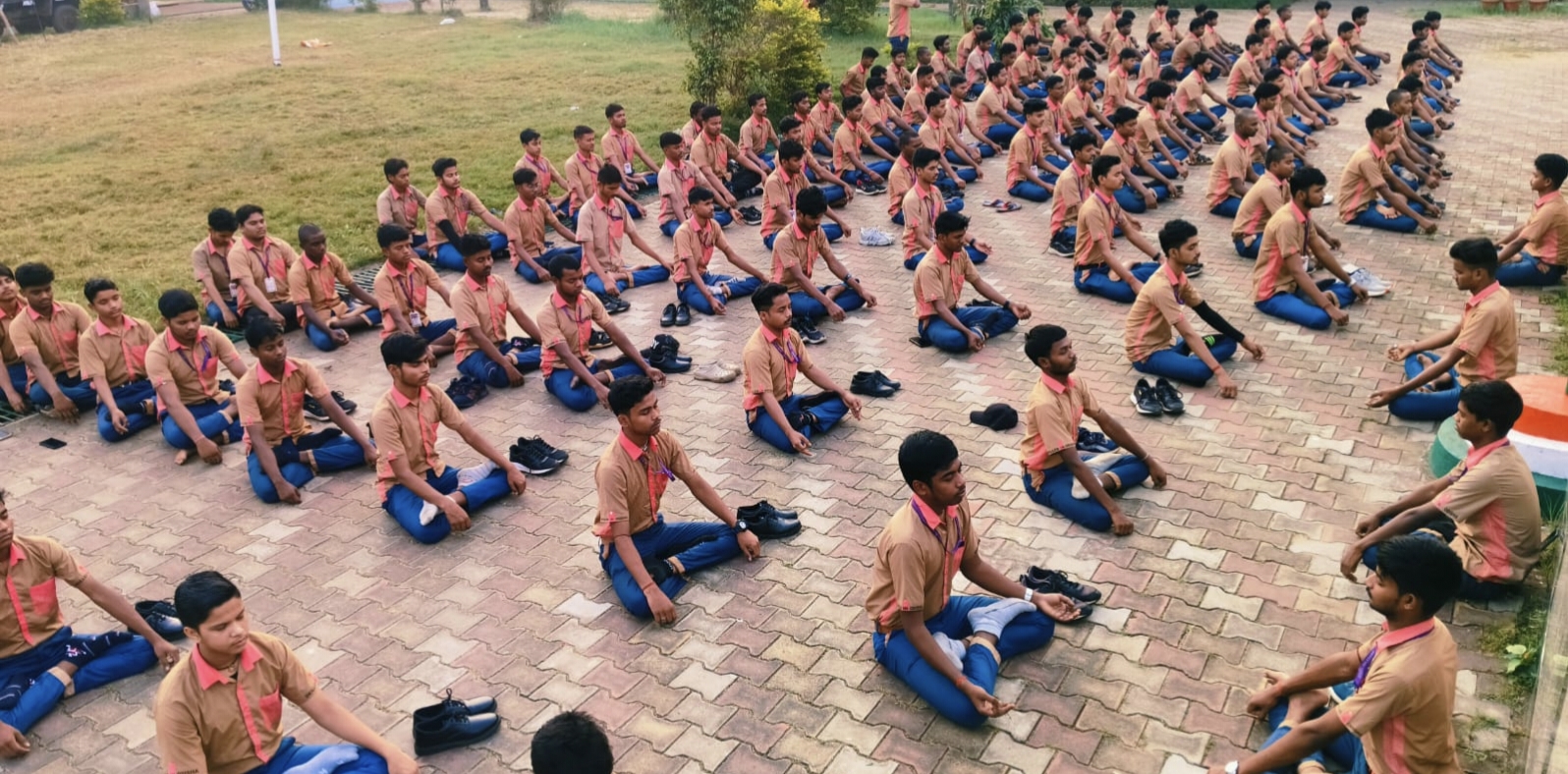
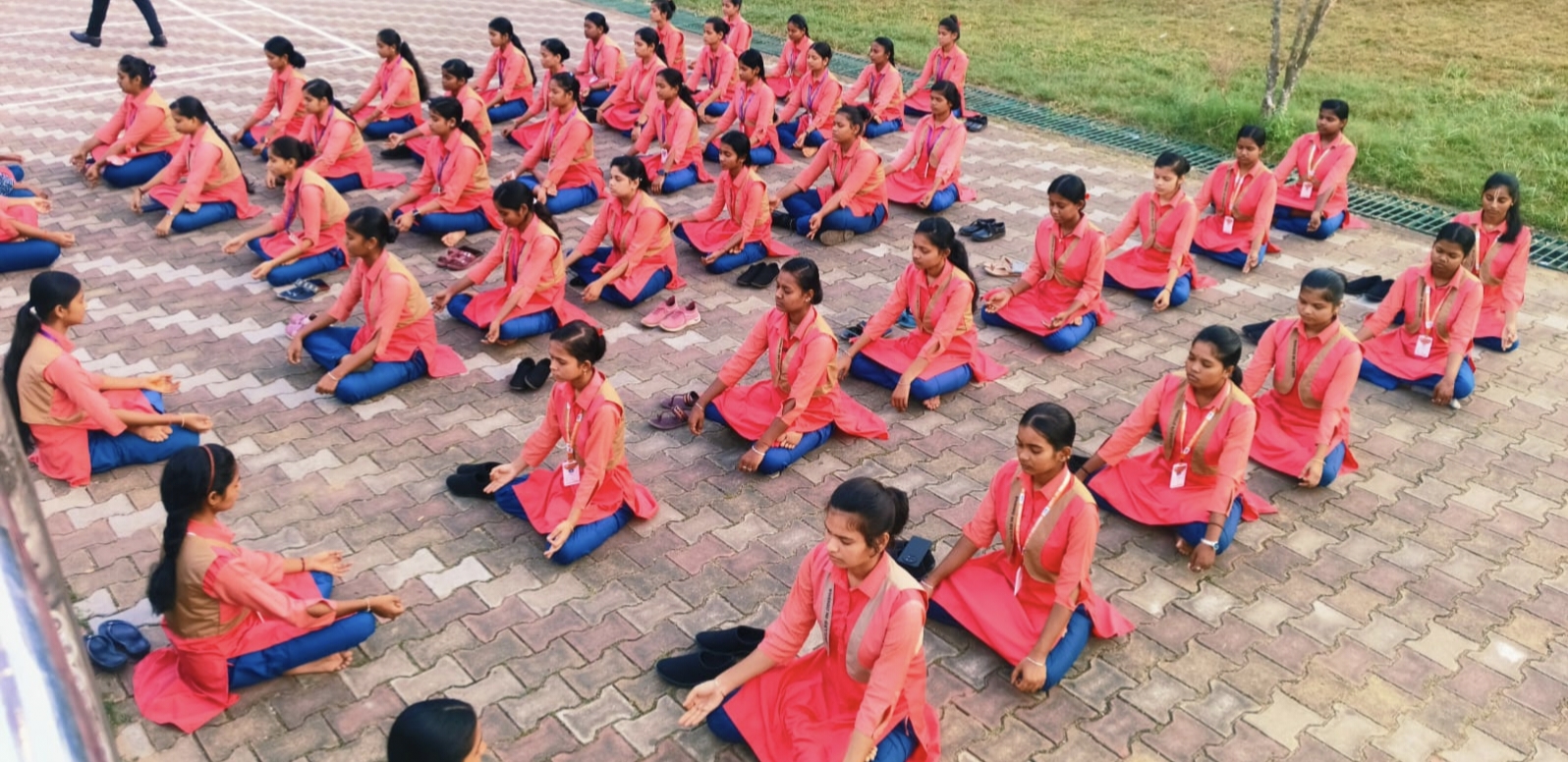
Explore Our Govt ITI Balasore's SPOTS Gallery

📸 Explore SPORTS Gallery

🧮 Quick ITI Percentage Calculator


WhatsApp